





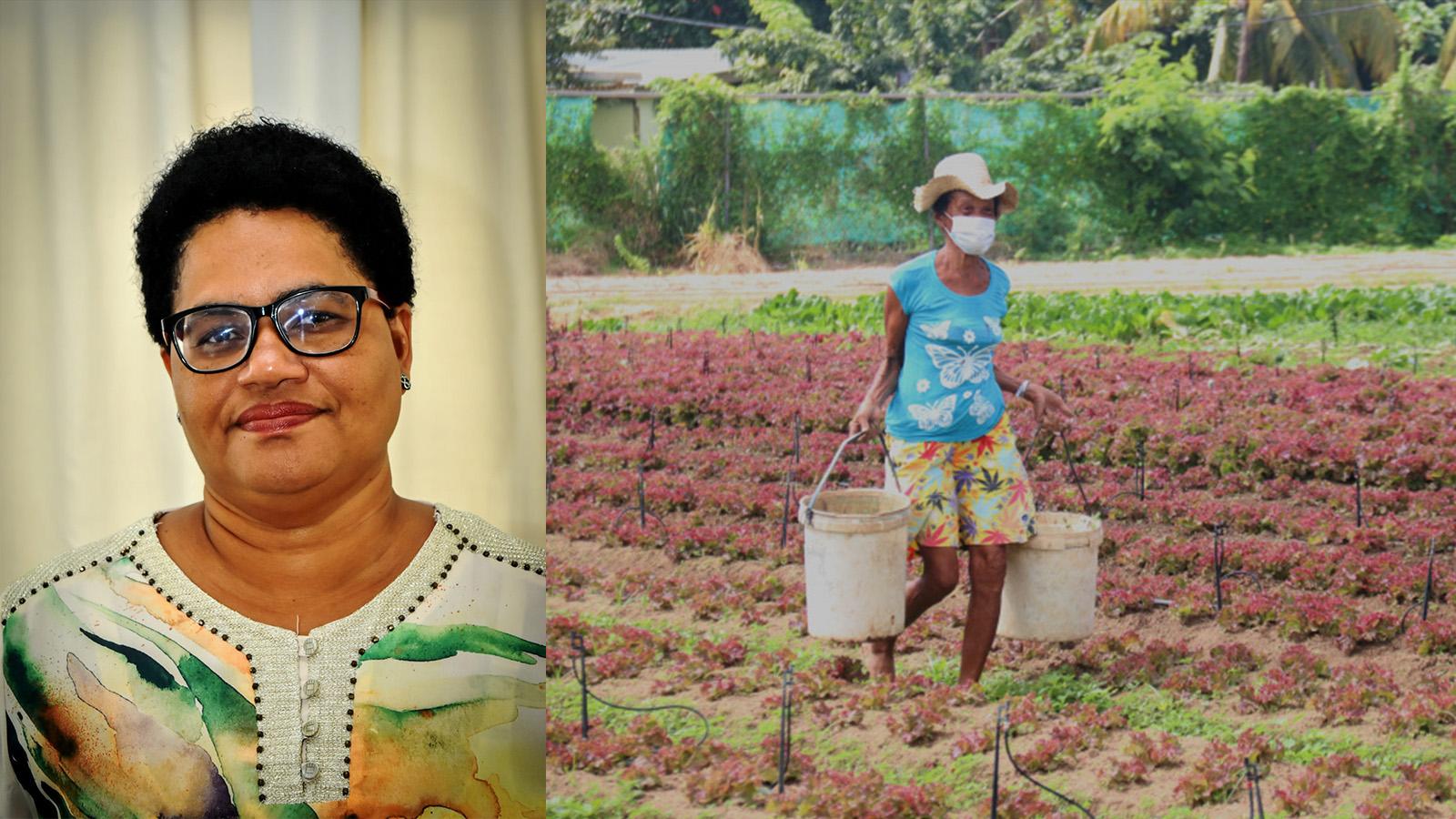
In this article, we want to present the creole lifestyle as a showcase of conviviality, creativity, healthy living, and so forth. This is a triumph over the debasement and disparity represented by slavery and the plantation, from which the creole culture and lifestyle emerged. The creole garden, originally created by the slaves as a source of sustenance, became the matrix of the creole lifestyle and culture. It became the source of not only sustenance, but also sharing between neighbours, experimentation for the development of the creole cuisine and herbal medicine, and a source of pride through the visual appeal of the garden.
The Seychellois creole lifestyle is closely associated with the notion of “joie de vivre,” sustainability, and the practice of indigenous knowledge systems, which is, however, in total contradiction to its origins in slavery and colonialism.Footnote 1 Similarly to other island Creole cultures which were ex-slave societies, the matrix of the Creole lifestyle was the provision grounds and kitchen gardens, grudgingly allocated to the slaves for the sole purpose of saving the slave owners the need to feed their workforce.Footnote 2 Feeding themselves allowed the slaves to form new communal bonds by sharing with neighbours and to develop their palates. By weaving their knowledge and ways of being from their original homelands into the dominant cultural practices that were permitted, they created a new culture altogether.Footnote 3 Thus, if the 21st-century Seychellois can speak of “joie de vivre” and boast about their richly varied Creole cuisine, it is due to the resilience and creativity of their ancestors who resisted effacement through their provision plots, and survived the vagaries of the tropical climate through the curative powers of their little back gardens. Yet this heritage is poorly understood by the Seychellois community, and few attempts have been made to link the creole garden and its historical implications to the Creole lifestyle. Furthermore, the creole garden and associated Creole lifestyle are perceived by the older generation as being under threat by globalisation and modernisation.
In this article, we discuss the Seychellois creole garden and lifestyle as both a tangible and intangible cultural heritage that represents resistance to enslavement through the resilience of indigenous knowledge systems and the ability to adapt and transform cultural practices. We explore the concepts of sustenance, conviviality, bricolage as creativity, and culture and identity in selected creole gardens from the district of Anse Royale on the island of Mahé, Seychelles. As the literature on Seychellois creole gardens, both as a historical reality and as a concept, is limited, we begin with a brief literature review, which explores concepts of the creole garden in the Caribbean that we feel are comparable to the Seychelles experience. We then give a brief overview of our previous research project “The Creole Garden and Kitchen Pharmacy” as part of a UNESCO pilot project linking indigenous knowledge systems to biodiversity conservation, climate change and disaster risk reduction in Eastern Africa.Footnote 4 Comparing the Seychelles creole garden to the Caribbean scenario allows us to engage in a thematic discussion of the project’s findings to explore the creole garden as a site of resilience and resistance and as a manifestation of both tangible and intangible Creole cultural heritage as defined by the UNESCO 2003 Convention.
1. The origins, significance, and functions of the creole garden
The creole garden must be understood first and foremost as the slaves’ domain—that is, those slaves whose lives revolved around producing for the plantation, but whose subsistence depended on, aside from the rations provided by the master, the provision grounds accorded to them in the margins of the plantation to subsidise their livelihoods.Footnote 5 It is from there that they experimented with herbs and condiments to develop a new Creole cuisine; from there that they learnt to nurture plants with curative powers, thus keeping themselves healthy and alive; from there that they built a new identity and culture, by creating a community, by telling stories and transmitting knowledge from their old cultures, and adapting them to the new social and physical environment.Footnote 6 In so doing, they defied the institution of slavery and remained people, instead of just property; they came to believe in something, instead of having no hope, and like many oppressed peoples, they resisted by being more than what was expected of them.
1.1. The plantation as cultural matrix
In his essay entitled “Culture on the Edges: Creolization in the Plantation Context,” Michel Rolph Trouillot describes creolisation as a miracle that occurred against all odds.Footnote 7 He ascribes this miracle to the provision grounds, which were ostensibly meant to enable the enslaved to provide for themselves, but which ultimately gave them the space and time to develop their new culture—their “third space,” so to speak.Footnote 8
Time used on the provision grounds was also slave-controlled time to a large extent. It was time to ‘create culture’ knowingly or unknowingly. It was time to develop new practices of labor cooperation, reminiscent of—yet different from—African models of work. … Time indeed to develop modes of thought and codes of behavior that were to survive plantation slavery itself.Footnote 9
However, this “slave controlled time” or “third space” existed within the larger confines of the plantation itself: a race-making institution whose extremely violent tenets were encoded in The Code Noir. The Code Noir was a decree established by King Louis XIV in 1687 that defined the conditions of slavery in French colonies and regulated the treatment of slaves.Footnote 10 Articles XLIV and XLVII refer to slaves as “property” and “inheritance,” thus dehumanising African people and allowing Europe’s exploitation of them on the basis that “they lacked the human accoutrements of civilisation and, above all, Christianity.”Footnote 11 The slaves’ creole gardens and provision grounds were crucial factors in the realisation of the Creole culture that contradicts the beliefs and stereotypes of Africans and other non-Europeans used to justify the institution of slavery. Slaves’ ability to feed themselves was a form of independence, which, Trouillot argues, is contradictory to the tenets of the plantation.Footnote 12 These discrepancies were allowed because it suited certain plantation masters, as it cut the costs of slave keeping. For the same reason, many instances of “petit marronage,” whereby slaves escaped for a day or two to attend rituals or visit friends and family on adjacent plantations, were tolerated.Footnote 13
Though located in the margins of the plantation, the provision grounds still enabled the slaves to apply familiar agricultural methods, producing root crops and vegetables adapted to the broken terrain allocated to them.Footnote 14 This bad terrain did not stop the tenants from raising goats, pigs, and fowls, nor from learning new methods of preparing and cooking them.Footnote 15 All cultural activities that took place in the margins of the plantation were an inherent form of resistance to slavery. On these grounds, the enslaved forged new relationships with neighbours, created communal activities, such as fishing in the adjacent rivers, sang inherited songs and created new ones, buried their dead according to ancient or new religious customs adapted to their new environment, and, most importantly, they developed family bonds, modes of thought and codes of behaviour, which became a civilisation.Footnote 16
1.2. Sustenance
One of the most important functions of the creole garden and provision grounds in the time of slavery was to provide sustenance for the slaves. Elizabeth DeLoughrey’s article, “Yam, Roots, and Rot: Allegories of the Provision Grounds” analyses how the provision grounds gave slaves a certain measure of alimentary and economic autonomy. However, DeLoughrey points out that provision grounds were “distinct from the small gardens slaves and peasants grew in their ‘home ground’ or yards.”Footnote 17 The plots allocated to the slaves were located on mountainous terrain that was not suitable for plantation crops like sugar cane.Footnote 18 As they had to walk very far to tend to these plots, the slaves planted their root crops and other starchy foods that took long to grow and were low maintenance, though highly nutritious.Footnote 19 B. J. Barickman also views provision grounds and backyard gardens as enablers of autonomy, as these plots provided a space in which the enslaved, and not the masters, were the primary decision-makers.Footnote 20 However, the distance of the provision grounds meant that the masters could very often more easily claim ownership of the goods produced there, or exploit the time spent there in their own interests.Footnote 21 The backyard garden, on the other hand, was in the close vicinity of the slaves’ living quarters and could easily be tended to. As such, food crops like vegetables, condiments, spices and herbs for various uses were nurtured, and supplemented by raising chickens, goats or pigs.Footnote 22 Both DeLoughrey and Barickman argue that the provision grounds and backyard gardens also allowed slaves considerable economic autonomy, as they contributed significantly to the internal markets in their communities. This was the beginning of self-actualisation, of working for achievement, and identity-making, compared to just being a beast of burden.
The most incredible outcome of the provision grounds and backyard garden remains, however, the creation of a new, vibrant culture, which in many ways has overshadowed the ignominies of slavery.
In addition to being a stepping-stone toward liberation, the slave gardens were also a powerful site of creolization. Slaves grew “a staggering array of crops,” blending European, African, and New World cultigens that included cashews, bananas, calabashes, calalu, okra, oranges, and other fruits and spices.Footnote 23
DeLoughrey points out that this diversity of food crops originating from all three continents involved in the Triangular Trade “was integral to the diets of all social strata of Caribbean slave states,” and serves as a cultural palimpsest.Footnote 24 Central to this is the creole concept of “food,” which refers to root crops such as yam, cassava, sweet potatoes, and other starchy foods like plantain and breadfruit.Footnote 25 These served as staples of the slave diet, which were complemented by the vegetables and spices grown in the backyard garden. DeLoughrey draws on the work of Sylvia Wynter and Barry Higman to elaborate on the symbolic importance of crops like the yam, in rooting the Caribbean peasantry and foodways in the history of African transplantation.Footnote 26 From this transplantation emerged not only an inherited agricultural tradition and the vibrant weekend markets which characterise Creole life, but also what Wynter calls “the space for folk knowledge, orality, resistance to commodification, and African and indigenous continuities.”Footnote 27
1.3. Apothecary
Provision grounds and backyard gardens also created the opportunity for slaves to develop their pharmacological skills by applying indigenous knowledge systems from their previous world to their new environment. Catherine Benoît explains that the gardens were not only used to feed the slaves or to provide them aesthetic pleasure, but also to grow plants with medicinal properties.Footnote 28 Indeed, the creole garden was also a repository of cures for all sorts of ailments and for preventive medicines. This was as significant for survival as it was for cultural continuities.
Benoît suggests that the ancestral wisdom of slaves survived in the plantation by following the “functional substitution” principle. If plants they used to cultivate in their homeland were not available in their new environment, they replaced them with plants with similar functions found in their American context. This process was enabled and enhanced by enslaved people’s interactions with Amerindians who taught them the use of the native plants.Footnote 29 This ethnobotanical knowledge has also influenced European research in tropical medicine and has resulted in the commercialisation of herbal medicine from the colonies.Footnote 30
This Caribbean Creole heritage was recently showcased when Annalee Davis took the Barbadian colonial heritage of medicinal plants to the Sharjah Biennale of 2023. Davis proposed that the Bait Al Hurma sanctuary in Sharjah should be appreciated as a site of disalienation, both in the context of the COVID-19 aftermath, and as a post-plantation living apothecary.
During the biennale, Davis offered her guests a cooling tea from Barbados, comprising lemongrass, bay leaf, and turmeric. According to the Barbadian healing tradition, these plants combined have “antibacterial, antifungal, anti-inflammatory and anti-oxidant properties while also aiding digestion and boosting the immune system.”Footnote 31 Apart from healing human bodies, plants can also heal the air and the soil. Davis refers to the slaves’ planting of botanicals amongst the hedgerows and furrows of sugar cane fields—which healed the nutrient-starved soil—as conscious acts of resistance against the destructive effects of the plantation’s monoculture.Footnote 32 These indigenous knowledge systems have been transferred to the creole garden, which is the ultimate site of “hospitality, guardianship and solidarity,” as Davis puts it, where knowledge can be transmitted and “the sacrality of everything in the living world” can be experienced.Footnote 33
1.4. Creativity, aesthetics, and bricolage
The creole garden is attractive and creative, because it makes extensive use of bricolage. Wendy Knepper sees bricolage as “a mode of interpreting and adapting existing materials to new circumstances or needs.”Footnote 34 Citing Raphaël Confiant, Knepper articulates how creolisation depends “on the intermixture of fragments through bricolage, the process of taking the materials at hand and using them in an improvisatorial fashion.”Footnote 35 This definition is in line with the root word of “creole,” which is the Latin word “creare.”Footnote 36 It is precisely why the creole garden, having been built in the margins of the plantation and from the broken fragments of the slaves’ memories, can be said to be the crucible of the Creole lifestyle and culture.
Like Patrick Chamoiseau’s “Maison Créole,” the bricolage that shaped the creole garden, and consequently, Creole societies, was influenced by the local geography, weather, and landscape.Footnote 37 Knepper adds to this mixture pre-existing experiences and relationships of the precolonial era, combined with the everyday practices of the New World.Footnote 38 As such, the creole garden and lifestyle are composed of two different elements that are nevertheless intertwined—the intangible, in terms of inherited knowledge systems and “savoir faire” which were adapted to the new landscape, and the tangible, which comprises the physical landscape and materials at hand.Footnote 39 In their discussion of the creole garden as a botanical heritage, Carol Sorhaindo and Violet Cuffy outline this intertwining between the tangible and intangible.Footnote 40 With regard to the tangible aspect, they cite Sealey, who describes the creole garden as “a tiny plot of land crammed with a multitude of crops.”Footnote 41 Below ground, the roots of the tightly packed plants are closely entangled.Footnote 42 This intertwining is reflected in the complex nature of Creole culture itself, which has indigenous, African, European, and other external inputs.Footnote 43
The creole garden is an expression of pride in the creole culture and might be seen as a showcase of the beauty of mélange and improvisation. Though not referring specifically to the creole garden as an example of creolisation in action, Knepper’s description of bricolage as the art of the fragmentary, which transforms the process of recomposing the creole identity into an aesthetic strategy, does include the garden in its scope.Footnote 44 This aesthetic strategy also includes community or national pride, as is illustrated by Ieva Padgett’s interpretation of George W. Cable’s creole gardens in his stories.Footnote 45 Padgett suggests that for Cable, gardening constitutes a form of citizenship, and, as such, his creole gardens represent “the ultimate expression of one’s commitment to local and national communities.”Footnote 46 Referring to Cable’s description of the New Orleans Creole Garden, for example, Padgett says that its strength lies “in its picturesque and quaint qualities, which, by virtue of being interesting and engaging to its neighbours, fulfils its civic duties and becomes a genuine participant in the democratic process.”Footnote 47 For descendants of the enslaved, the creole garden is thus a manifestation of pride in their existence and, as such, an expression of resistance.
2. Seychelles and the Indian Ocean
The Indian Ocean creole zone comprises the Seychelles and Mascarenes archipelagos, the latter of which includes Reunion, Mauritius, and Rodrigues, and was named after the Portuguese explorer Pedro Mascarenhas.Footnote 48 Seychelles was the last of the Indian Ocean islands to be settled permanently by the French in 1770, after Reunion, in 1663, and Mauritius in 1721.Footnote 49 Mauritius and Seychelles were annexed by the British in 1811, and thus benefited from the abolition of slavery in 1835 when it was imposed by the British Colonial Office, whereas France conceded abolition in Reunion in 1848.Footnote 50 However, illegal slave trafficking and slave-keeping continued in all three islands.Footnote 51 Recently published research suggests that, in Seychelles, this trafficking might have spilled over into the early 20th century.Footnote 52
Unlike the Caribbean, Seychelles and the Mascarenes were uninhabited when they became plantation islands.Footnote 53 Botanical knowledge and exploitation were, as such, inherited and evolved from the different ethnic groups which formed the slave population and the settlers. For example, similarities in herbal terminologies, plants and cures point to a shared heritage between Seychelles, the Mascarenes and the Chagossian population which was displaced to Mauritius and Seychelles, as these islands have similar botanical features, and because of inter-island migrations during the colonial era.Footnote 54 Seychelles’ botanical heritage is a bit more unique because its inner islands are granitic remnants of the ancient landmass, Gondwanaland, rather than volcanic. It is also outside the cyclonic belt which affects the Mascarenes; thus, its flora tends to grow larger and taller.Footnote 55 This luxuriance and variety have become part of the cultural heritage of Seychelles, through their use by traditional healers and the general population, which reflects the multi-ethnic origins of the Seychellois and their pharmacological heritage.Footnote 56
The creole garden was the mainstay of subsistence for slaves in the Indian Ocean as long as colonialism was in place, because life revolved around the plantation economy until then.Footnote 57 The garden generally has the same meanings and functions in all the plantation islands.Footnote 58 Each segment of the population had a subsistence garden, because their insular existence and the rare visits of provision boats made it necessary. There is evidence of this in old maps of the first official settlement, L’Etablissement du Roy, which was established between 1778 and 1782 (Figure 1).Footnote 59 The map shows kitchen gardens adjacent to Commandant Charles Routier de Romainville’s homestead and adjacent to the camp of the skilled workers and soldiers who had come with him to build the town.Footnote 60 No such detail has gone into the slaves’ camp, indicated only by a series of squares, set well away from the settlement. However, it is likely to follow the same pattern, with an adjacent garden, as they also needed to eat. At any rate, they were the ones who tended the gardens that kept the white officials and workers in fresh food.Footnote 61 The creole garden in Seychelles is thus almost as old as the settlement.
Figure 1.
Map of l’Etablissement du Roy. Source: Gallica.bnf.fr/Bibliothèque nationale de France. Source: Touboul Reference Touboul and Burridge2021.

Figure 1. Long description
3. The creole garden as cultural heritage and memory in Seychelles
The creole garden in Seychelles has been documented for the first time in The Creole Garden and Kitchen Pharmacy. Footnote 62 The project was conducted in 2020 and was led by the Creole Language and Culture Research Institute, University of Seychelles. The research was focused on the creole garden as an indigenous knowledge system and cultural heritage, and how that knowledge system can assist in climate change mitigation and biodiversity conservation in Seychelles.
The study linked the creole garden to the Intangible Cultural Heritage (ICH) domain of Knowledge and practices concerning nature and the universe of the UNESCO 2003 Convention. It includes “knowledge, knowhow, skills, practices and representations developed by communities by interacting with the natural environment.”Footnote 63 The study on the creole garden in Seychelles (between 2020 and 2021) was aimed not only at assessing it as an ICH element linked to biodiversity conservation and climate change mitigation and adaptation, but also at its transmission. As such, a mixed-methods approach was chosen, with one arm of the study targeting post-secondary school students, aged between 15 and 25 years, on their knowledge and use of the creole garden, and the other arm targeting a group of elders from the Anse Royale district who were known to be maintaining a creole garden. The youths had to answer a questionnaire, whilst the elders were interviewed on site in their gardens.
Purposive sampling was used to select a restricted number of the elders who are owners of creole gardens. All of these participants are members of the Heritage Foundation of Seychelles (SHF) “Living Heritage” project, and as such are qualified to be informants in this domain. They have expertise in Creole cuisine, the use of medicinal plants, and practice a typical Creole lifestyle associated with the creole garden. Though the desired sample in this target group was 14, only 8 were actually achieved due to COVID-19 restrictions, which were suddenly reinforced during the fieldwork period. The researchers documented the different creole gardens selected and the knowledge of the informants on their cultural meanings and uses.
This present study focuses on the data collected from the site visits and interviews with the elders because it is mainly preoccupied with the origins, characteristics, functions, and societal meanings of the creole garden. The data has been analysed under the following themes: (i) sustenance, (ii) conviviality, (iii) creativity and bricolage, (iv) culture and identity. The approach is thus purely qualitative, using mainly content and context analysis to discuss the creole garden as an important element of the Seychellois intangible cultural heritage, with the main focus being the above-mentioned themes. The conclusions arrived at in this analysis are supported by the few existing documents about the use of plants in Seychellois traditional life, especially with regard to medicinal plants and food sources. The data also suggest that the creole garden is a dying tradition in Seychelles, being restricted to pockets of the rural districts, with fewer instances of transmission. This makes it urgent to conduct further research in this domain and promote the practice, especially since the COVID-19 Pandemic made it glaringly clear how vulnerable Seychelles is in terms of food security and medical supplies.
The small size of the sample has rather limited the study, since the researchers were not able to compare their findings with data from other regions of the archipelago. As it is, only one district in one region was selected, because of the nature of the project initiated by UNESCO, which was a pilot study, and thus required only a small but representative sample. Its purpose was to raise awareness of the issue of the contributions that indigenous knowledge systems can make to biodiversity conservation and climate change mitigation. The validity of the findings would have been better enhanced by more data from all the regions of the country, including the inner islands, which are known for their traditional lifestyles and productive home gardens.Footnote 64
Nevertheless, the site visits and observations of the eight gardens selected for the study in the Anse Royale district confirmed that parallels of the creole garden in the Caribbean exist in Seychelles. However, though all of the informants understood what the researchers meant by the concept of a creole garden, and acknowledged their own gardens as conforming to that concept, none of them had referred to these gardens by the appellation “creole garden” before. Other appellations such as traditional garden or heritage garden had been used, in juxtaposition with other more modern gardens, which tend to focus more on the ornamental rather than the utility. During the creole garden fieldwork, for example, there was a clear distinction between one informant’s traditional garden, featuring typical creole garden plants such as medicinal herbs and fruits, and her daughter’s more modern garden featuring ornamental plants such as orchids and palms.
By analysing the data collected from garden site visits and interviews through the core themes identified in our literature review—sustenance, conviviality, creativity and bricolage, and culture and identity—we demonstrate that the traditional heritage garden is a manifestation of Seychellois Creole culture and a locus of its resilience and resistance.
3.1. Sustenance
The backyard garden and provision grounds which emerged from the plantation system in Seychelles have undergone some transformations, but they are both associated with the traditional garden, and are both understood primarily as sources of food to sustain the family. Food includes starchy crops and vegetables, as well as the condiments that give Seychelles creole food its flavour. All of these were observed in the gardens visited between 2020 and 2021 at Anse Royale, and were testified to by the elders in their interviews. What was also observed was that the elderly generation is still affected by the vestiges of slavery, through transgenerational trauma. For example, when asked if coconuts were part of the creole garden, since it is such an important ingredient in creole food, Flora Bonnelame lowered her voice and looked around quickly before responding: “Coconuts were a police affair!” Indeed, before the post-independence land reforms, people were jailed for taking one coconut to cook.Footnote 65 Slave descendants were allowed to have their subsistence crops in their back gardens—but coconuts were the landowners’ property because it was a cash crop. However, the elders also see their gardens as an expression of their creole identity in terms of food security and economic freedom. Mrs. Bonnelame is proud she now owns her coconut trees and earns extra income from her garden.
What became obvious during the fieldwork was that the spatiality of the creole garden in Seychelles has changed to adapt to the evolving socio-economic conditions, though its primary function is still to sustain the family’s livelihood. As a typical example, Anita Mathiot’s garden at Les Canelles, Anse Royale, has decorative plants at the front for kerb appeal, medicinal plants on one side, vegetables and condiments on the other side (kitchen side), and fruits and starchy foods at the back. The back of Mrs. Mathiot’s property is steep and rather wild, compared to the compound surrounding the house. This back portion is in fact larger than the other sections, and is used rather like a provision ground, with breadfruit, cassava, sweet potatoes, and fruit trees that tend to grow tall. Mrs. Mathiot and her family also keep goats and chickens for meat and eggs, and they have a tortoise pen, as they favour its manure for fertilising their plants. The layout of Mrs. Mathiot’s garden reflects the fact that provision grounds have generally merged with the creole garden, where the property is spacious enough to permit this. The provision grounds are known as the bitasyon, the short form of habitation in French, which originally refers to the plantation homestead, but in time came to mean a plot which is a bit distanced from the homestead, where staples like sweet potatoes, breadfruit, plantain, and cassava were grown.Footnote 66 The land redistribution reforms of the 2nd Republic, namely, the Land Acquisition Act of 1977, saw the acquisition of land which had previously been held by a very small minority of white landowner descendants, and its redistribution amongst the working classes who had previously been landless.Footnote 67 This meant that most people had to reorganise their creole gardens to provide both the crops that were traditionally grown close to the home, and those grown in the bitasyon. For those who have larger, inherited family plots such as Mrs. Mathiot’s, it has been possible to maintain a clear space for foods usually found in the provision grounds.
Upon collating the data, it immediately became clear that the most traditional forms of food, according to the informants, were the starchy foods like sweet potatoes, cassava, breadfruit, plantain, and to a lesser extent, taro, and yam. These are generally known as “gro manze” in Seychelles Creole (literally, “big food”), and were traditionally grown in the bitasyon. Several informants referred to them as “the food of our ancestors” or “the food of Grannter” (Grande Terre in French), meaning Africa and Madagascar.Footnote 68 This affective relationship to starchy crops is analogous to the Caribbean concept of “food” discussed by Deloughrey, especially in reference to Jamaica, where these were also staples of the enslaved people’s diet.Footnote 69 In linking these starchy foods to Africa and Madagascar, the informants are also supporting the theory that root crops have a symbolic importance in rooting the foodways of the New World colonies, including the Indian Ocean region, in the history of African transplantation.Footnote 70
DeLoughrey and Wynter argue that root crops like the yam were secretly smuggled by slaves across the Middle Passage, thereby defying the intentions of the colonisers, by maintaining strong symbolic links with their original homelands. This was not only resistance, but literally sustained the slaves and kept them alive. It is possible that in Seychelles too, yams and other plant seeds were secretly transplanted by slaves, since few plants found in the islands at the time of settlement were edible.Footnote 71 Interestingly, some informants showed some aversion to breadfruit in contrast to yams and other root crops, associating it with the misery imposed by the colonisers:
Breadfruit was pigfood, and it was the food of the poor!
I had to eat too much of it when I was young. Now I don’t have to. I prefer cassava and sweet potatoes. That’s what our ancestors ate.Footnote 72
They fed our grandparents breadfruit. I also had to eat it because sometimes there was nothing else.
As the breadfruit was definitely introduced by the colonisers to feed the slaves, this can be understood as another form of resistance.Footnote 73
Though the spatiality of the creole garden has evolved to adapt to changing circumstances, for the older generation at least, it is still the source of the staples associated with the Seychellois’ slave ancestors, and the source of ingredients for the creole cuisine. It is also a site of resistance, both because it is the crucible of the creole culture and the means of survival for both people of slave and coloniser descent. The staples from these gardens sustained all classes, as the isolation of the islands meant that for small communities, reliance on outside imports was not advisable, and local produce was the only real source of food security. However, the study also revealed the fact that creole gardens are kept mostly by elders, and that the practice is in decline. Supermarkets and commercial farming have replaced the creole garden as the family’s main source of food. It was interesting to see people going back to the practice of relying on medicinal herbs and produce from their home gardens or obtained from relatives and acquaintances with a garden during the COVID-19 pandemic. The closed ports and airports revealed how vulnerable Seychellois people are, and how the creole garden could increase food security, even if on a smaller scale.
3.2. Conviviality
In his description of the slaves’ developing culture in the margins of the plantation, Trouillot mentions activities such as raising and roasting a pig, running after a goat, barbecuing a chicken, leaning over the fence to talk to a neighbour, fishing in the river, singing old songs and inventing new ones, worshipping gods, telling stories.Footnote 74 What he is in fact describing is the conviviality or joie de vivre associated with creole culture. In this section, we look at some aspects of the creole garden that is originally associated with this joie de vivre.
The Seychellois are well known for their hospitality and kindness.Footnote 75 The 2020–2021 fieldwork highlighted hospitality rituals, such as the friendly welcome, that are linked to the spatiality and the resources of the creole garden. From a spatial perspective, there is invariably an indoor-outdoor transition area where the garden becomes central to the welcoming ritual, as illustrated by two selected case studies from our project. Mrs. Flora Bonnelame of Les Canelles welcomed the fieldworkers under the veranda attached to her house with juice made from fruits collected from her garden (Figure 2). Her daughter had blended ripe papaya, starfruit, and passionfruit. This was accompanied by home-made fritters and slices of papaya. The fieldworkers were wowed, not only by the victuals, but also by the amazing array of decorative plants which seemed to blend with the architecture of the veranda. Plants hung from the eaves, crept up the supporting poles, sat in beautiful bowls on the balcony, and stood in strategic corners, inside and outside. It was clear that Mrs. Bonnelame took great pride in receiving people there, and that this space was also her sanctuary.
Figure 2.
Welcoming refreshments under Flora Bonnelame’s veranda. Photo courtesy of Cindy Moka, 2020. Source: Touboul Reference Touboul and Burridge2021.

Mrs Marie-Anne Adrienne of Mont Plaisir has a more modest home that did not boast a veranda. However, she had turned the lean-to attached to her craftwork store into a reception area. This was also her workspace and is traditionally known as langar in creole (from French “hangard,” meaning a shed). The poles of the langar were sturdy and grey with age, as was the traditional tabli (work table), which was graced with a colourful plastic tablecloth, on which Mrs. Adrienne had placed the more traditional welcoming jug of bigarad (calamondin) juice. A riot of colourful blooms and leafy displays graced the sides and front of the langar, blending with the cascading rainforest in the foreground, and far, far out, the twinkling sea. With Mrs. Adrienne’s rich sharing of her knowledge of the creole culture, visitors come away from this modest but beautiful space feeling that they have had a million-dollar experience.
The conviviality of the creole lifestyle is represented not only by the space where people are received and the refreshments offered, but also what they come away with: the intangible sharing of experiences, recipes, and advice, as well as the tangible gifts of fruits, vegetables, flower cuttings or seeds from the garden.Footnote 76 This has been acknowledged by all the informants of the study as “the Seychellois way of doing things.” It is also known as the practice of “living together,” which is associated with the creole culture.Footnote 77 The more traditional Seychellois know that they are entitled to ask for medicinal plants for their personal use from neighbours and friends, as well as plant cuttings and seeds for embellishing their gardens. The giver always reminds the receiver that for these, saying thank you is not expected, with a joking insinuation that the outcome might not succeed if this rule is broken. More likely, the tradition comes from the knowledge that it is the host’s duty to share. This is what typifies “living together,” which emerged from earlier times, when survival depended on people looking out for each other. The vibrant culture that came out of this, and which is described as conviviality, is a triumph over the degradation that slavery tried to impose.Footnote 78
3.3. Creativity and bricolage
Everything that turns out well in the creole garden is due to the gardeners’ creativity and the ability to bring the best out of whatever is at hand. This is the full sense of bricolage, as discussed by Knepper and creolists from both the Atlantic and Indian Ocean creole zones.Footnote 79 This includes turning difficult terrain into a productive space, eking out the most uses from plants and objects, recycling and repurposing, mixing the aesthetic and the useful. In short, the creole garden turns less into more.
The most evident aspect of bricolage in the creole gardens involved in the 2020–2021 fieldwork was the recycling of materials and objects for planting (Figure 3). Recycled and repurposed objects that were used as pots for plants included old tires, bowls, jugs, basins, plastic bottles, jerry cans, powdered milk tins, and other such household items. Most of the items mentioned above are recycled objects which came from the households of the gardeners themselves, or had been scavenged or salvaged from somewhere else. Money had not been wasted on buying fancy plastic pots, and in many cases, the recycled containers had been painted for enhancement. In some cases, even cultural objects like the kokosye (recipient made from a coco de mer, sawn in half) and the iconic cast iron cooking pot had been used. This cooking pot has come to symbolise both the Seychellois cuisine and the fusion of the multi-ethnic Seychellois people, and every household had one.Footnote 80 This is the essence of repurposing, as these objects, having outlived their usefulness in the kitchen, find new purpose outside the house. The reason for so many repurposed items in the creole garden is that the terrain is often rocky, steep and broken, or the soil is stiff clay. The objects are filled with better soil, or are arranged to fit the lie of the land, so that no space is wasted. In Marianne Adrienne’s garden, the objects also served to create raised beds known as tartar/farfar and originating from the Makua and Malagasy cultures.Footnote 81 The fieldwork thus revealed the adaptation of methods inherited from indigenous knowledge systems as well as from the consumer society of contemporary life.
Figure 3.
Roselia Balette’s pathway, decorated with plants in recycled containers. Photo courtesy of Cindy Moka, 2020. Source: Touboul Reference Touboul and Burridge2021.

Variety and mixing are other aspects of bricolage in the creole garden that reflect not only the gardeners’ attempt to make the garden produce what they need, but also their desire to make it pleasing to the eye.Footnote 82 Thus, making the best use of space combines the aesthetic with the useful. “Mon met mete, melanz melanze” (I put things here and there, mix this and that), said Roselia Balette, whose garden is situated at Pointe au Sel. Indeed, the lane to her house is bordered by tropical blooms such as ginger torch, which are recent introductions in the Seychelles, and traditional flowers like belzamin (Impatiens balsamina), pisanli (Asteraceae), and kaladyonm (Caladium), which were introduced earlier. Traditional decorative plants also have multi-functions such as antiseptic properties or as a mosquito repellent.Footnote 83 Some of the elders who have knowledge of the endemic plants and their properties also incorporate these in their gardens. Marie Cecile Adrienne, for example, nurtures Bwanounou (Vitex Trifolia) and bwasousouri (Ochrosia oppositifolia) in her garden, both of which are indigenous plants with medicinal properties.Footnote 84 As creolisation is a process of assimilation, the more recent trends and flavours in Seychellois cooking and herbal experimentation have resulted in plants from different cultures finding their way into the creole garden. For instance, basil and rosemary from the Mediterranean, the Noni plant from Southeast Asia and Egusi from West Africa can now all be found in Seychellois heritage gardens.
Making more out of less is perhaps the most creative way that the Seychellois make use of the produce from their creole gardens, as well as getting the most use out of each type of produce. For example, eggplant and green papaya are used to increase the volume of a dish if the meat or fish is limited. The informants call this “fer rann,” meaning making more. This is the same principle employed in the making of American “soul food,” using whatever is at hand to turn meagre and rejected ingredients into tasty, abundant meals.Footnote 85 As for making the most of a plant, there can be no better example than the coconut. For the plantation owners, this plant was valued as a cash crop for making coprah in the post-slavery period.Footnote 86 For the slave descendants and ordinary people, it had many more uses. Several informants confirmed the following uses: cooking oil, hair oil, purge, rubbing oil, milk (for flavouring and cooking), chicken feed, refreshing water, brooms, baskets, claddings for huts and roofing… It is for this reason that this plant is dubbed the tree of life in Seychelles.Footnote 87 This is bricolage at its best, illustrating how past generations of creoles made maximum use of materials that were at hand in their environment.
3.4. Culture and identity
The creole garden in Seychellois society is a cultural space within the creole homestead. It is the site where cultural transmission takes place most frequently, and represents both the tangible and intangible aspects of the creole lifestyle. In this section, we are going to look at the informants’ perspectives of the creole garden, and the indigenous knowledge systems associated with it, such as cultural practices and beliefs, and the knowledge of plants and their uses.
The creole garden is the foundation of the creole identity and culture. The results of the interviews held with the Anse Royale elders show that this is a shared opinion amongst them. Marie-Cecile Adrienne’s expression of this idea might perhaps be said to be representative of the group’s general perspective: “The creole garden is our culture, our heritage, our food, our plants and our medicine.” She went on to say that if one does not have a creole garden at home, it cannot be called a creole home. Generally, the fieldwork revealed that the elders’ interactions with their environment and their understanding of nature influenced their decisions on how to embellish the garden space. For example, several informants explained that trees with far-reaching roots such as the mango should be furthest from the house as their roots might damage the foundations, whilst lemongrass should be close to the house because its aroma deters mosquitoes. This also includes the traditional knowledge system of maintaining the creole garden, such as using natural fertilisers. They see the garden as a sanctuary, where they can revitalise and shed their daily worries. In that respect, the garden is also the source of their joie de vivre, and reflects their savwarfer (savoir-faire or know-how), the latter being considered a very important element of the Seychellois culture and code of living.
One of the most important aspects of the creole garden is that it functions as a site for the transmission of indigenous knowledge systems, inherited from the different ethnic groups that made up its population. The most important aspect of this is the knowledge of plants and their uses. Below is a short list selected from the data (Table 1):
Table 1
Selective list of creole garden medicinal plants and their uses from 2020 fieldwork

Table 1 Long description
Source: Information from Anse Royale elders who were interviewed about their creole gardens for a UNESCO pilot project on the use of Intangible Cultural Heritage in Biodiversity Conservation and Climate Change Adaptation and Mitigation (Choppy et al. Reference Choppy, Vel, Vel, Durbarry, Rose, Benoit and Moka2021).
Some research publications on the use of medicinal herbs in the region have validated these traditional medicinal practices.Footnote 88 The most interesting is a study by Laura Jeffery and Rebecca Rotter on plants as a living cultural heritage for dispersed Chagossians in Mauritius, Seychelles, and the United Kingdom.Footnote 89 The afflictions treated with herbal medicine by this community range from simple aches, skin infections, and digestive disorders, to chronic diseases such as cancer, diabetes, high blood pressure, and respiratory diseases like asthma.Footnote 90 These findings highlight the shared botanical heritage of the Southwest Indian Ocean region, and the practice of traditional medicine associated with it. The study of the creole garden in Seychelles shows that the primary function of the creole garden has changed from the provision of food to what Annalee Davis calls “apothecaries of care.”Footnote 91 Furthermore, Jeffery and Rotter propose that plant exchanges cultivate kinship and other social connections within the broader community.Footnote 92 This seems to hold true in the creole garden study, as testified by several informants who said that their children and neighbours come to their gardens to seek cures for mild ailments.
There are other, more archaic knowledge systems associated with the creole garden which are rather obscure. This includes cultural practices and beliefs which have informed people’s behaviours and values, though not all of them are considered relevant by everyone anymore. Flora Bonnelame, for example, gave some uses of papaya leaves as a pesticide when mixed with salt, against snails, and also as a stimulant, smoked by the older men. Anita Mathiot said that in her childhood, her father used to soak pandanus leaves and use the water as a pesticide against aphids and other such pests. These practices have become redundant as they have exotic replacements. Pesticides are now chemical-based, and cannabis is more popular as a stimulant.Footnote 93 Similarly, only four out of the eight informants interviewed had Bwamalgas (Trema orientalis) in their gardens, indicating its increasing rareness (Figure 4). It is believed to protect the home from evil spirits, and some of the informants explained that seven tender leaves of the plant have to be infused and drunk in the morning if you have dreamt that you ingested poison or some evil-intentioned concoction the night before. The existence of these practices is supported by the well-known Seychellois herbalist, Ferdinand Vidot, in his interview with researchers from the Culture Department in 2013.Footnote 94 The data from the research shows that a lot of this type of knowledge has been eroded because it has tended to be associated with witchcraft or practices that are taboo. For example, most of the elders were reluctant to talk openly about this aspect of the creole garden. This is partly due to colonialist oppression, mainly through imposing the Christian religion, as any other beliefs were discredited. However, some of these beliefs and practices have survived through the creole garden.
Figure 4.
Bwamalgas nestled amongst decorative plants at Therese Bertin’s home. Photo courtesy of Cindy Moka, 2020. Source: Touboul Reference Touboul and Burridge2021.

Since 2010, the National Heritage Resource Council has been inventorying all existing ICH elements in Seychelles. The fieldwork and data analysis of the Creole Garden and Kitchen Pharmacy project have clearly shown that the creole garden is an important element of Seychelles’ Intangible Cultural Heritage. However, the garden has not yet been documented as a specific element in the national inventory of Intangible Cultural Heritage of Seychelles. The fact that Africa Traditional Medicine Day is now an annual event which promotes the usage of plants as medicine, coupled with the gradual increase in publications on medicinal herbs and traditional medicine, gives hope that the Creole Garden and all its ICH components will eventually be recognised.
4. Conserving the Creole Garden as Heritage
Tracing back the creole garden to its roots in the back gardens and provision grounds during slavery has indeed proved it to be a site of resistance and resilience. Whilst intending to ensure maximum profitability from their slaves by giving them the responsibility of feeding themselves, plantation masters unintentionally gave them the space and time in which to create a new culture.Footnote 95 If today the provision grounds no longer exist in their original forms in Seychelles, the foods that were grown there, that is, crops of sustenance like cassava, sweet potatoes and plantain, foods associated with the lost homeland, still survive as traditional fare, and are recognised as components of the Seychellois traditional culture.Footnote 96 Survival and recognition are the keywords here.
The famous Seychellois hospitality and joie de vivre does not come only from French colonisers’ love of the good life, but also from the slaves’ determination to make a good life for themselves in the space that they were allowed. It is through the determination to regain their pride that they made their space a convivial one, through bricolage and creativity. It is why creole gardens are colourful and bountiful. If people took pride in the amount and the variety that they could produce in their small and difficult spaces, then they still do so now, but with an understanding that the sharing of these bounties implies a statement of their identity, values, and culture. The creole garden is the crucible of the creole culture, from the creole cuisine, the creole lifestyle which encompasses the creolisation elements of assimilation, adaptation, and transformation, to the social interactions and transmissions of culture that are still taking place there. This is what has been established by the data analysis of the 2020–2021 study.
However, the results of the study also show that the creole garden and its maintenance are endangered practices. Once the present generation of elders who still have a creole garden and use it in the traditional way is gone, this heritage is in danger of disappearing. There is thus an urgent need not only to document these practices as a Seychellois cultural heritage, but also to sensitise the public on the ways in which this heritage can benefit them in the contemporary world. As the 2021 pilot project has shown, the creole garden can promote the creole lifestyle by giving people the possibility to make healthier choices by using more organic goods, and reducing pharmaceutical imports by relying more on medicinal herbs from the garden. In the long run, this practice could also reduce Seychelles’ carbon footprint. By recognising the creole garden as an element of Seychelles’ ICH elements, the government can assist in conserving this heritage and encourage people who do not have access to a creole garden to contribute to its survival by making better use of its products.
Finally, when comparing creole gardens from the Indian Ocean against those in the Caribbean, it becomes clear that this is a common heritage issuing from the conditions of slavery and the creolisation process. In many ways, it is analogous to the linguistic phenomenon of creolisation, whereby creole languages in the Atlantic and Indian Ocean creole zones share many similarities.Footnote 97 For example, creole gardens in Seychelles have the same values of sustenance, healing, and methods of recycling as in the Caribbean. However, whereas the Indian Ocean heritage combines the usual mix of African indigenous knowledge systems in a European-based society, which in this region was primarily East African knowledge systems, this heritage had an important component of the oriental knowledge systems, inclusive of the Malagasy, East Indian, and Middle-Eastern heritage.Footnote 98 The Caribbean heritage also combines an African heritage in a European-based society, but the African component is dominated by West African knowledge systems.Footnote 99 Though the Caribbean also had an Eastern Indian component in their creole heritage, the indigenous Amerindian knowledge system is the component that differentiates it from the Indian Ocean creole heritage. Both creole zones, however, have the same principles of resistance through survival and resilience, embedded in the lifestyle enabled by the creole garden. This makes the creole garden a global heritage issuing from a historical phenomenon, and its endangered status thus calls for common action.
Author contribution
Conceptualization, Data curation, Formal analysis, Methodology, Writing - original draft: P.C.; C.M.; T.V
Conflicts of interests
The authors declare no competing interests.
- Se connecter ou s'inscrire pour publier un commentaire
- 1 vue